
A late order does more damage than one missed shipment. It can trigger a refund request, a bad review, and a customer who never comes back. That is why many growing sellers start asking the same question: what is an ecommerce fulfillment center, and when does a business actually need one?
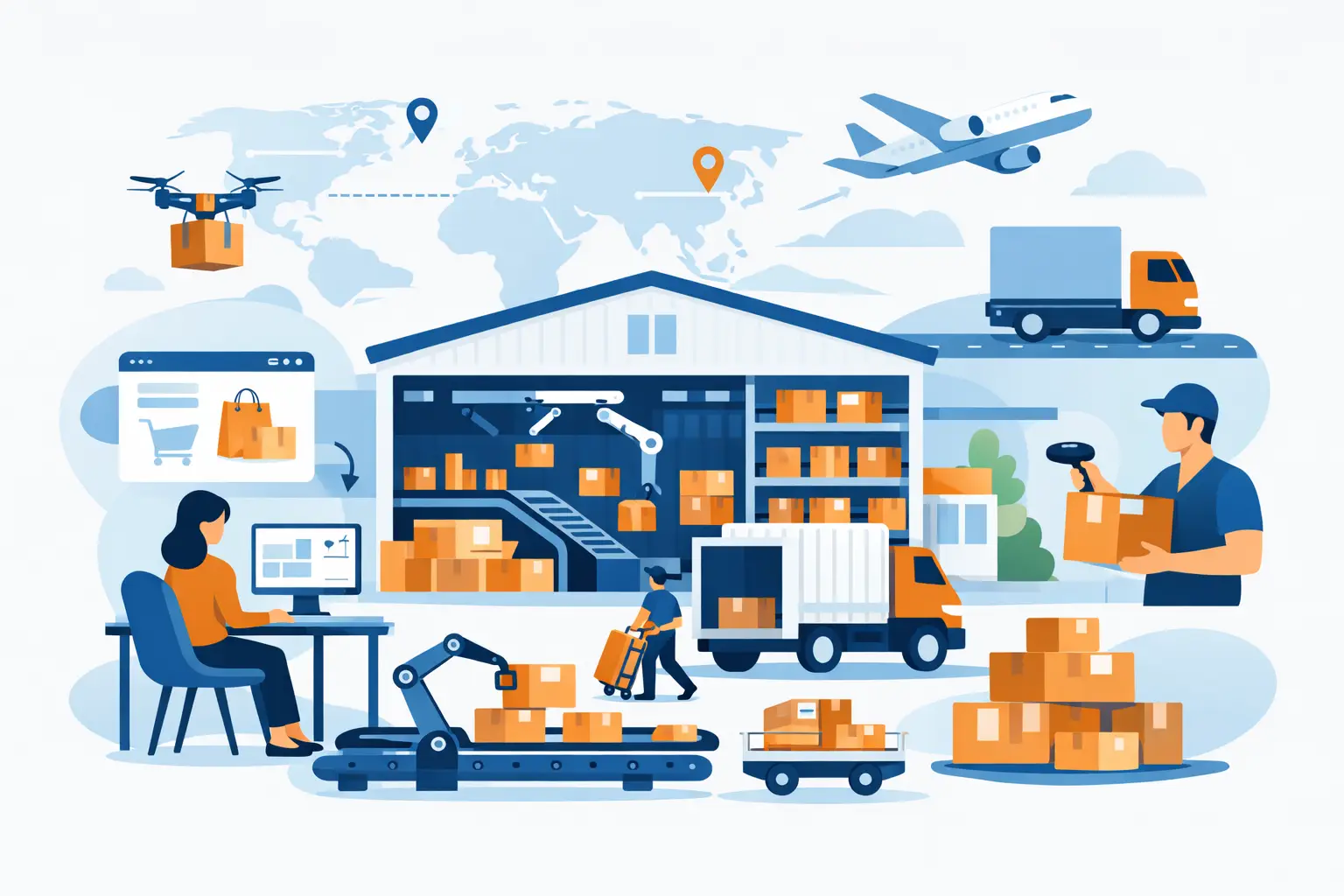
At a practical level, an ecommerce fulfillment center is a facility and operating system that stores inventory, picks and packs orders, and ships them to customers. But for online sellers, SMEs, and retail operators, it is more than warehouse space. It is the part of the business that turns orders into delivered parcels accurately, quickly, and at scale.
What is an ecommerce fulfillment center?
If you sell online, fulfillment starts the moment a customer places an order. Someone has to confirm the order, locate the item, pack it properly, print the shipping label, hand it to the courier, and often manage tracking, returns, or buyer collection arrangements. A fulfillment center is built to handle that workflow efficiently.
Unlike a basic storage warehouse, a fulfillment center is designed for movement. Inventory comes in, gets organized by SKU, then moves out continuously as customer orders are processed. The goal is not just to store products. The goal is to keep orders flowing with fewer delays, fewer packing mistakes, and better visibility for the seller.
That distinction matters. A traditional warehouse may be suitable for holding stock in bulk for long periods. An ecommerce fulfillment center is built around daily order activity, fast turnaround, and shipping coordination.
How an ecommerce fulfillment center works in real operations
In most cases, the process starts when a seller sends stock to the fulfillment location. The products are received, counted, checked, and stored. From there, the seller's incoming orders are transmitted into the fulfillment workflow, either manually or through a connected platform.
Once an order comes in, the team picks the item from storage, packs it based on product type and delivery needs, and prepares it for shipment. If the operation is set up well, tracking information is updated quickly so the seller and buyer can see parcel status without extra follow-up.
This sounds simple on paper, but the value is in consistency. A good fulfillment center creates repeatable processes. It reduces the chance that one team member packs the wrong item, that an order sits unprocessed for a day, or that stock records stop matching reality.
For some businesses, fulfillment may also include kitting, relabeling, promotional inserts, returns handling, and support for self-collection. That matters for sellers with bundle products, imported stock, seasonal campaigns, or buyers who prefer more flexible delivery options.
Why sellers outgrow in-house packing
Many ecommerce businesses begin by packing orders at home, in a back office, or from a retail shop. That can work at the early stage because it keeps costs tight and gives the owner direct control.
The pressure starts when order volume rises. Shelves get crowded, packing materials take over the workspace, and staff spend more time preparing parcels than serving customers or growing sales. Errors also become more expensive. Sending the wrong variation, missing a delivery cutoff, or running out of packing supplies can quickly affect customer experience.
This is usually the point where the question changes from "Can we pack orders ourselves?" to "Should we still be doing this ourselves?"
An ecommerce fulfillment center helps shift fulfillment from an improvised task to an organized business function. That does not mean every business needs one immediately. It means businesses with growing order flow, multiple SKUs, or limited staff often reach a stage where outsourcing or structured fulfillment support becomes the more practical choice.
The business benefits of a fulfillment center
The biggest advantage is time. When owners and staff stop spending hours printing labels, sorting stock, and packing boxes, they can focus on sales, purchasing, customer service, and planning.
The second advantage is operational control. A proper fulfillment setup can improve stock accuracy, standardize packing, and reduce shipment delays. These are not just internal improvements. They affect real outcomes like repeat orders, customer trust, and refund rates.
There is also a scaling benefit. During campaign periods, festive seasons, or marketplace sales, order volume can spike sharply. A seller packing in-house may struggle to keep up. A fulfillment center is better positioned to absorb those peaks because the process, staffing, and space are already designed around order handling.
Cost is where businesses need a balanced view. Fulfillment can lower hidden labor and error costs, but it is not automatically cheaper in every scenario. Small sellers with very low order volume may find self-fulfillment more economical for a period of time. The right decision depends on order frequency, product size, staffing limits, and how much operational complexity the business is carrying.
What to look for in an ecommerce fulfillment center
Not all providers operate the same way, and this is where many sellers make rushed decisions. Price matters, but process matters more.
A reliable ecommerce fulfillment center should have clear receiving procedures, accurate inventory handling, practical packing standards, and dependable shipment coordination. If stock takes too long to check in, if order cutoffs are unclear, or if communication is inconsistent, problems tend to show up quickly.
Technology also plays a major role. Sellers need visibility into inventory levels, order status, and parcel movement. Even if the system is simple, it should help the business stay informed instead of creating more manual checking.
Location and network design can matter too. For businesses serving urban and suburban buyers, access to local logistics touchpoints, drop-off capability, and flexible collection options can improve delivery experience. That is especially useful when customers want convenience beyond doorstep delivery alone.
When a fulfillment center makes the most sense
There is no single order number that applies to every seller. A business shipping 20 complex orders a day may need help sooner than a business shipping 50 simple ones.
In general, fulfillment support becomes attractive when packing is slowing down the business, when inventory errors are increasing, when marketplace performance depends on faster shipping, or when the owner wants to scale without hiring an internal warehouse team.
It also makes sense for businesses selling across multiple channels. If orders are coming from a website, social commerce, live selling, and marketplaces at the same time, it becomes harder to manage stock and shipping manually without mistakes.
For retail operators and entrepreneurs, fulfillment can also open a different opportunity. A logistics model that combines digital order management with neighborhood collection and parcel handling can create added value locally. That is one reason hybrid logistics ecosystems such as iExpress appeal to both merchants and station partners. They support not just delivery, but also practical touchpoints for collection, parcel services, and related business activity.
Common misconceptions about fulfillment centers
One common assumption is that fulfillment is only for large brands. In reality, many SMEs use fulfillment because they need structure, not because they are huge.
Another misconception is that outsourcing fulfillment means giving up control. The opposite can be true if the provider has better systems than the seller's current setup. More visibility, cleaner stock handling, and standardized dispatch processes often give the business stronger control than a manual in-house operation.
Some sellers also assume fulfillment solves every logistics problem. It does not. If product data is messy, stock is sent late, or customer promises are unrealistic, even a good fulfillment center will be limited. Fulfillment works best when it is part of a well-managed sales and inventory process.
What is an ecommerce fulfillment center really buying you?
It is buying capacity. It is buying process. It is buying fewer daily bottlenecks around the part of ecommerce that customers notice immediately - whether their order arrives correctly and on time.
For some businesses, that means outsourcing everything from storage to dispatch. For others, it means using a partner for selected workflows, peak periods, or delivery and collection support. The right model depends on your products, your volume, and how hands-on you want to remain.
If you are still asking what is an ecommerce fulfillment center, the simplest answer is this: it is the operational engine behind online order delivery. And when that engine runs well, the rest of the business has more room to grow.