
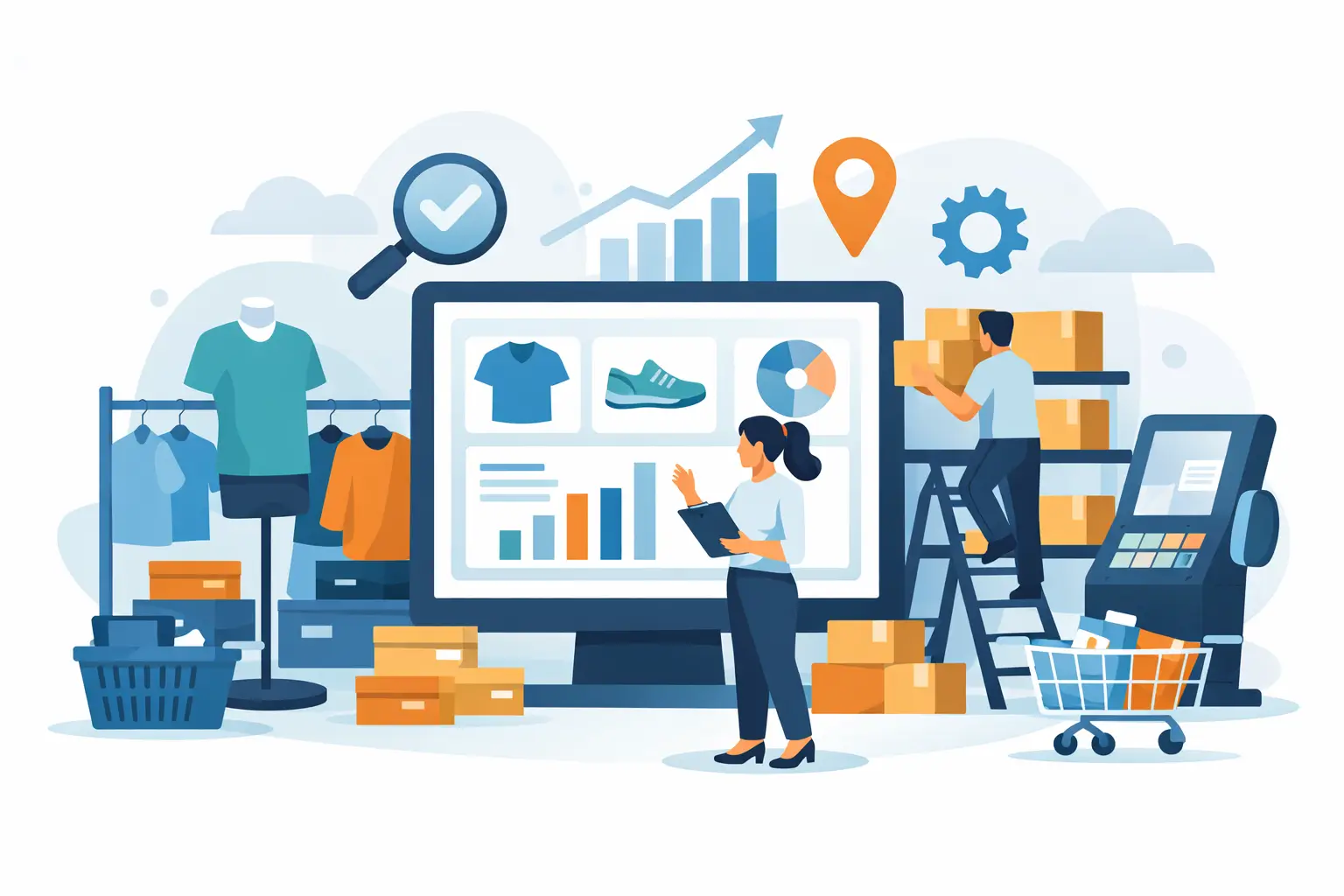
A retail counter looks simple from the outside. A few shelves, a point-of-sale terminal, some packaging supplies, and products ready to move. But any shop owner or operator knows the real challenge is what happens behind that counter - tracking stock, keeping displays relevant, avoiding dead inventory, and making sure customers can actually find what they came for. That is where a merchandizing system starts to matter.
For small retailers, station operators, and growing commerce businesses, merchandising is not just about making products look good. It is about controlling how products are placed, monitored, replenished, and sold. A good system helps reduce guesswork. It gives operators a clearer view of what is moving, what is sitting too long, and where small changes can improve turnover.
What is a merchandizing system?
A merchandizing system is the process and supporting tools used to plan, organize, monitor, and improve how products are presented and managed in a retail environment. In practical terms, it connects product visibility with inventory control and sales performance.
Some businesses still handle this manually. They rely on staff memory, handwritten notes, and visual checks on shelves. That can work at a very small scale, but problems show up quickly once product variety increases or customer traffic becomes less predictable. Items get misplaced, fast sellers run out, and slow sellers keep taking up valuable space.
A more structured merchandizing system gives the business a routine. It can include shelf planning, stock checks, display rules, restocking schedules, sales tracking, and performance reviews. In more advanced setups, it also ties into digital tools so operators can compare product movement by location, season, or campaign period.
Why a merchandizing system matters in daily operations
Most operators do not lose money because of one major mistake. They lose it through small, repeated inefficiencies. A missing label causes confusion. A top-selling item is out of stock for three days. A product with low demand stays on a front-facing display for a month. These issues seem minor on their own, but together they affect customer experience and revenue.
A merchandizing system helps create control. It gives staff a standard way to manage product placement and stock flow, rather than relying on whoever happens to be on shift. That consistency matters even more for businesses with multiple locations or shared operating models.
For example, if a retail point also handles parcel services, packaging sales, drop-off activity, and walk-in customer support, space becomes a real operational asset. Every shelf and counter area has to justify itself. Products need to be easy to see, easy to access, and aligned with customer demand. Without a system, retail space gets cluttered and service speed suffers.
The core parts of an effective merchandizing system
The strongest systems are usually not the most complicated ones. They are the ones that operators can actually maintain.
First, product categorization needs to be clear. Items should be grouped in a way that makes sense for how customers shop and how staff replenish. If packaging materials, accessories, impulse items, and service-related products are mixed together without logic, both sales and service efficiency drop.
Second, stock visibility has to be reliable. A shelf may look full from the front while actual back-up stock is already low. That gap creates a false sense of security. A workable system tracks not just what is displayed, but what is available for refill and when reordering should happen.
Third, display rules need to be practical. Businesses often overcomplicate visual merchandising, but most smaller operators benefit more from consistency than creativity. Best sellers should be visible. Seasonal or promotional products should have a defined space. Low-priority items should not crowd high-demand areas.
Fourth, review cycles should be built in. Merchandising decisions should not be permanent. If a display is not converting, or a product category has slowed down, the setup should change. This is where data matters. Even a basic weekly review can reveal patterns that are easy to miss during busy operating hours.
Where businesses get it wrong
One common mistake is treating merchandising as decoration rather than operations. Good presentation matters, but appearance alone does not improve sell-through. If the system does not support replenishment, tracking, and decision-making, the display only looks organized on the surface.
Another issue is using the same setup for every outlet or sales point. In reality, local demand varies. A neighborhood store serving online sellers may need stronger visibility for packaging supplies and shipping-related add-ons. A more consumer-facing point may benefit from convenience products or services placed near the transaction area. A merchandizing system should create standards, but it also needs room for local adjustment.
Businesses also run into trouble when staff are not trained to follow the system. Even the best shelf plan will fail if no one checks compliance, updates stock movement, or flags products that are underperforming. Systems work when they are operational, not when they exist only in a spreadsheet.
How digital tools improve a merchandizing system
Once a business grows beyond one simple location, manual control becomes harder to sustain. That is where digital support starts to pay off. A merchandizing system backed by digital tools can show stock movement, identify sales trends, and help operators make faster adjustments.
This does not always mean a complex enterprise setup. For many SMEs, the real value is basic visibility. Which items sell fastest at which outlet? Which products need replenishment more often? Which display zones consistently underperform? Those insights help businesses use limited space more efficiently.
Digital systems also support accountability. When operators across several retail points follow the same reporting process, management can compare locations more fairly and identify where support is needed. That is especially useful in network-based models where service consistency affects customer trust.
In a logistics-linked retail environment, this becomes even more relevant. Businesses are no longer just managing product shelves. They may also be balancing packaging materials, service counters, collection traffic, and operational supplies. A practical system helps align retail merchandising with fulfillment activity instead of treating them as separate functions.
Choosing the right merchandizing system for your business
The right setup depends on what you sell, how often stock moves, and how your physical space is used. A small shop with a narrow product range may only need structured shelf rules, reorder thresholds, and weekly review routines. A larger operator with multiple service points may need stronger reporting, centralized oversight, and integration with broader retail or logistics workflows.
Cost matters, but so does usability. A system that looks impressive and never gets used is a poor investment. Most SMEs are better served by a practical setup that staff can follow consistently than a feature-heavy platform that creates more complexity than value.
It also helps to think beyond product sales alone. If your location supports customer collection, parcel drop-off, printing, packaging, or related services, the merchandizing system should reflect that mixed-use reality. Product placement should support traffic flow, not fight against it. High-demand service items should sit where customers naturally pause. Frequently used operational supplies should be accessible to staff without disrupting front-counter efficiency.
That is why businesses increasingly look for partners that understand both retail execution and logistics operations. In hybrid service environments, merchandising decisions affect speed, convenience, and revenue at the same time. iExpress works in that kind of operating model, where retail points need to serve customers efficiently while also supporting parcel activity and business services in a practical way.
A merchandizing system is really a control system
At its best, a merchandizing system is not just about shelves. It is a way to control space, stock, and customer attention with more discipline. It helps operators make fewer reactive decisions and more deliberate ones.
That matters for growing businesses because expansion usually exposes weak routines. What feels manageable in one location becomes inconsistent across three or five. A system gives the business something repeatable. It creates standards, but it also makes performance easier to measure and improve.
If your retail environment is carrying more responsibility than before - more products, more services, more customer traffic, more operational pressure - then merchandising cannot stay informal. The better approach is to build a system that fits the way your business actually runs, then keep refining it as demand changes.
The goal is not a perfect display. The goal is a retail operation that is easier to manage, easier to scale, and better at turning space into sales.