
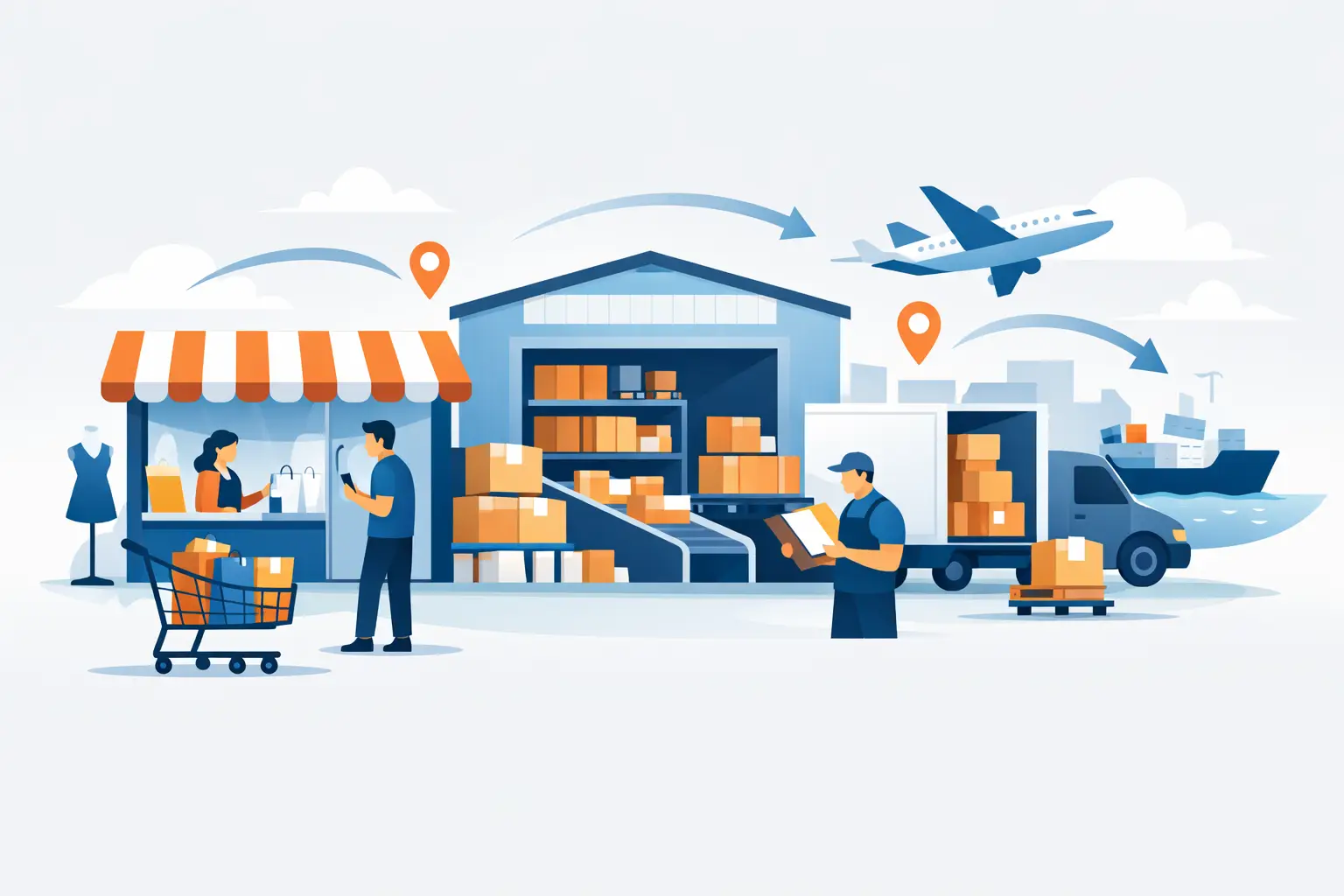
A retail store that only sells products is leaving value on the table. For many customers, the real decision is not just what to buy, but how easily they can receive it, return it, collect it, or send something back out. That is why retail now works best when logistics is part of the offer, not treated as a separate function behind the scenes.
This shift matters for small businesses, online sellers, and storefront operators alike. Foot traffic is harder to win, customer expectations are higher, and every square foot needs to earn its keep. A location that can support parcel drop-off, self-collection, packaging, and fulfillment has a stronger role in the local market than a store that depends on product sales alone.
Why retail has changed
Retail used to be defined mainly by inventory on shelves and transactions at the counter. Now it is shaped by convenience. Customers move between online browsing, in-store visits, social commerce, and marketplace orders without seeing those as separate channels. They simply expect the process to be easy.
That expectation puts pressure on business operators. A merchant may be selling through an online store, a marketplace, and a physical outlet at the same time. A neighborhood shop may want more recurring traffic without carrying more stock. A growing seller may need fulfillment support but cannot justify a full warehouse setup. In all of these cases, logistics stops being a backend issue and becomes part of the retail model itself.
This does not mean every store needs to become a mini distribution center. It means the most resilient retail businesses are the ones that add useful services around buying and delivery. The store becomes a practical access point, not just a sales counter.
Retail and logistics now share the same customer journey
When a customer shops online and picks up nearby, that is retail. When a seller drops off parcels from a store location instead of arranging daily dispatch from home, that is also retail. When a local outlet helps with printing, packaging, and collection, it is doing more than filling shelf space. It is supporting commerce in a way customers and businesses can use immediately.
This is where many operators see a change in how their location performs. A shop offering parcel-related services often gets more repeat visits because it solves routine needs. Some visitors come in to collect an order and make an extra purchase. Others first visit for shipping or packaging and return later because the location has become familiar and useful.
There is a commercial advantage here, but it depends on execution. If service is slow, unclear, or inconsistent, added logistics can create friction instead of value. The model works when the process is simple, staff know what they are doing, and the digital side supports the physical location rather than complicating it.
What modern retail points are really selling
For many operators, the product is no longer just the item on the shelf. It is access, speed, reliability, and convenience. A customer may choose one seller over another because pickup is easier. A business may prefer one service point because parcel handling is faster and operating hours suit their workflow.
That is why service design matters. A well-placed retail point can support several business needs at once. It can help consumers collect parcels closer to home or work. It can help sellers manage daily drop-offs without extra travel. It can help small businesses handle packaging or printing tasks without setting up those capabilities internally.
The practical result is that a retail location can generate value from more than one type of customer behavior. It can serve the walk-in shopper, the online buyer, the marketplace seller, and the business operator who needs reliable support. That diversity can make a location more stable, especially when pure product sales are unpredictable.
Where the opportunity is for store owners
For existing retail operators, adding logistics services is not simply about offering something new. It is about making the premises work harder. Extra foot traffic is useful, but only if it is relevant foot traffic. Parcel collection, drop-off, and outlet-based support services bring in people with a clear purpose, and that tends to create more consistent daily activity.
There is also a revenue logic behind this model. Many retail businesses already have rent, staff, utilities, and counter space in place. If they can add a service that fits into their existing setup, they may be able to create a new income stream without starting a separate business from scratch.
Still, this is not a universal fit. The location matters. Staffing matters. So does the local customer mix. A store in a dense residential area may benefit from self-collection demand, while a business district may see stronger drop-off traffic from online sellers and working professionals. The right setup depends on how people in that area already shop, send, and receive.
Retail for online sellers is no longer optional
Online sellers often feel the strain of growth first. A few orders a day can be handled from home. A few dozen begin to create real operational pressure. Printing labels, packing orders, arranging dispatch, managing missed deliveries, and answering customer messages all start to compete for time.
At that point, retail-based logistics support becomes useful because it reduces operational drag. Nearby drop-off points shorten dispatch routines. Self-collection options can lower failed delivery issues. Fulfillment support helps sellers avoid turning their office, spare room, or storefront into a packing station.
The benefit is not only convenience. It can also improve customer confidence. Buyers are more comfortable when delivery and collection options are clear. They are less likely to abandon a purchase if the post-sale process feels predictable.
This is one reason hybrid retail and logistics models are gaining attention. They give smaller merchants access to capabilities that used to favor larger players. A business does not need to build everything in-house to operate professionally. It needs dependable local infrastructure and a process that can scale.
The role of digital tools in retail operations
Physical access still matters, but digital visibility is what keeps the operation manageable. A retail point handling parcel services needs more than a counter and storage area. It needs a system that helps operators track items, manage handovers, and maintain service consistency.
Without that digital layer, simple tasks can become messy very quickly. Parcels get misplaced. Customers arrive without clear notifications. Staff spend too much time checking statuses manually. These problems are operational, but they affect customer trust directly.
Good digital support does not need to be flashy. It needs to be useful. Clear parcel status, easy intake, accurate records, and straightforward service workflows do more for retail performance than a long list of features nobody uses. For businesses, practical tools are usually the ones that save time, reduce confusion, and make training easier.
This is where a connected model can make sense. A network of local service points supported by a digital platform gives both customers and operators a more consistent experience. That matters whether the user is collecting one parcel or managing fulfillment volume across many orders.
Why convenience wins, but reliability keeps customers
Many retail concepts can attract first-time use on convenience alone. A nearby location, longer operating hours, or simple pickup options are enough to get attention. But repeat use depends on reliability.
If customers are told a parcel is ready, it needs to be ready. If a seller drops off orders before cutoff, processing needs to happen as expected. If a retail partner joins a service network, support and procedures need to be clear from day one.
This is one reason logistics-led retail can be hard to copy well. On paper, the service sounds straightforward. In practice, it depends on process discipline. Businesses that treat it casually often create more complaints than loyalty.
For operators who get it right, though, the payoff is meaningful. They become part of customers' routine. That is a strong position in any local market.
A more practical future for retail
The next phase of retail is not about choosing between physical and digital. It is about making each location more useful. Stores that support sending, collecting, fulfilling, and managing parcels are better aligned with how people already live and shop. They are not waiting for traffic to happen. They are giving customers and businesses a reason to return.
That is the bigger opportunity for brands such as iExpress and for the retailers, sellers, and entrepreneurs they support. When logistics is built into the retail experience, the location becomes more than a shopfront. It becomes working infrastructure for modern commerce.
For business owners, that is worth looking at closely. The most valuable retail space today is not always the one with the most products. It is often the one that solves the most real-world tasks, consistently and well.