
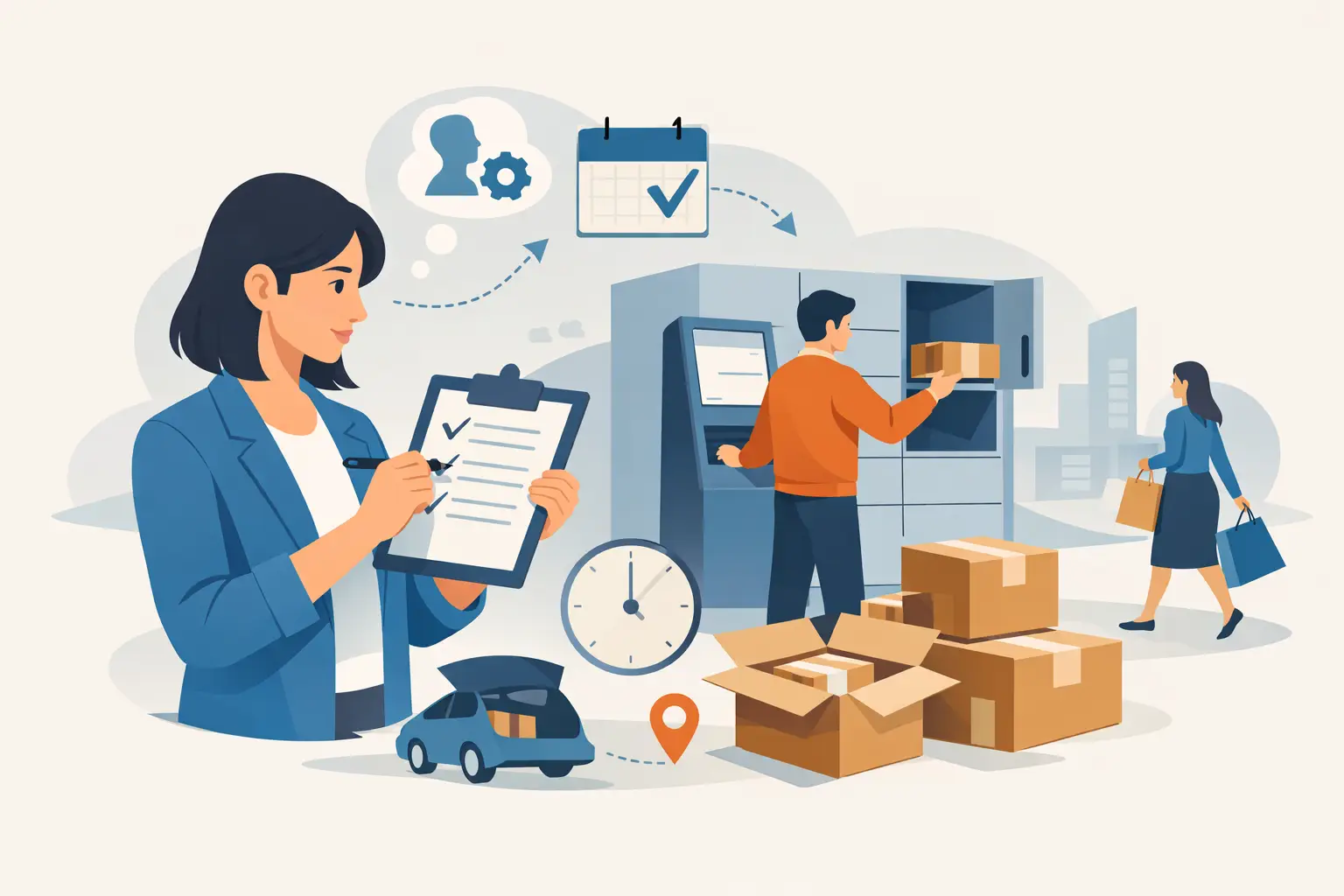
Self-collection sounds simple until parcels start piling up behind the counter, buyers arrive late, and staff waste time searching for packages during peak hours. If you want to know how to manage self collection properly, the answer is not just setting a pickup point. It means building a process that is easy for customers, controlled for staff, and workable at scale.
For online sellers, retailers, and station operators, self-collection can reduce failed deliveries, lower last-mile pressure, and give buyers more flexibility. But it only works well when the operational details are clear. A pickup option that saves time on paper can create daily friction if parcel intake, storage, notifications, and handover are handled loosely.
Why self-collection needs active management
Self-collection is often treated as a convenience feature, but from an operations point of view, it is a mini fulfillment workflow. Every parcel must be received, recorded, stored, matched to the right customer, and released securely. If one part is inconsistent, the customer feels it immediately.
The most common problems are predictable. Parcels arrive without proper labels, staff do not know where to place them, pickup messages go out late, and customers show up without reference details. None of these issues are complicated on their own, but together they slow the counter, increase errors, and weaken trust.
That is why managing self collection well starts with structure. The goal is not to create a complicated system. The goal is to make every pickup follow the same logic, whether you handle 20 parcels a day or 500.
How to manage self collection with a clear workflow
A strong self-collection operation usually follows five stages: receive, verify, store, notify, and release. Each stage should be defined before volume grows.
Receive and verify every parcel on arrival
The handoff into your location matters more than many businesses expect. When parcels arrive from sellers, fulfillment teams, or transport partners, staff should confirm basic details immediately. That includes recipient name, tracking or reference number, condition of the parcel, and the date received.
If parcels enter the system without verification, the problem shows up later at the counter. Staff may struggle to confirm whether an item was ever received, and customers may insist they were told it was ready. A quick intake check prevents larger disputes.
This is also where barcode scanning or digital logging makes a difference. Manual notebooks may work for a very small operation, but once pickup volume grows, search time becomes a hidden cost. A digital record reduces confusion and gives staff one source of truth.
Organize storage by retrieval speed, not just available space
One of the biggest mistakes in self-collection is treating storage as an afterthought. Parcels get stacked wherever there is room, which feels manageable at first but creates delays later. Good storage is about retrieval speed.
A practical setup groups parcels by a system staff can follow consistently. That might be by arrival date, customer surname, order number range, or pickup status. The right method depends on your volume and counter layout. High-volume locations usually benefit from a coded shelf or rack system that links directly to the parcel record.
There is a trade-off here. A very detailed storage system can improve accuracy, but it may also slow intake if staff need too many steps. The best approach is usually the simplest structure that still allows fast retrieval during busy periods.
Send pickup notifications at the right time
Customers should only be notified when the parcel is physically received, logged, and ready for release. Sending pickup messages too early creates one of the most avoidable service failures in self-collection.
The message itself should be clear. It should tell the customer where to go, when pickup is available, what reference or ID to bring, and whether there is a collection deadline. If any of that is missing, your counter team ends up explaining it manually.
For businesses handling larger volumes, automated notifications are worth serious consideration. They reduce staff workload and make communication more consistent. Still, automation should not replace process control. If the parcel status is wrong, the automated message simply spreads the error faster.
Set pickup rules before problems happen
Many self-collection issues are not caused by customers being difficult. They happen because the rules were never made clear. Buyers need to know what qualifies as a valid pickup, how long parcels will be held, and what happens if someone else collects on their behalf.
Define identification and authorization rules
At minimum, staff should check a reference number and customer identity before releasing a parcel. For higher-value items, a stricter rule may be necessary, such as matching a government-issued ID or requiring a one-time code.
If third-party collection is allowed, the process should be documented. Some businesses accept a forwarded pickup message and ID from the authorized person. Others require prior approval from the original buyer. The right level of control depends on the type of goods being handled and the level of risk your business is willing to carry.
What matters most is consistency. If one staff member releases parcels casually while another follows strict checks, disputes become harder to resolve.
Set a reasonable holding period
A parcel cannot sit indefinitely in limited counter space. That means your holding period should be long enough to be convenient, but short enough to protect storage capacity.
For many operations, a few business days to one week is practical. If your customer base includes working professionals who collect after office hours or on weekends, a slightly longer window may improve pickup rates. On the other hand, if space is tight, you may need a shorter collection period with clear reminder messages.
The key is to communicate the deadline early and repeat it before the hold period ends. Customers are much more likely to comply when the expectation is visible from the start.
Train staff for speed and control
Self-collection may look like a front-counter task, but it is really a process discipline. Staff need to know not just what to do, but why each step matters.
They should be trained to log parcels immediately, store them in the correct location, verify collection details, and record final release. They should also know how to handle exceptions, such as damaged parcels, missing references, expired holding periods, or customers disputing notifications.
This is where many growing businesses run into friction. The owner understands the workflow, but the process lives in memory rather than in a clear operating standard. Once multiple staff members or branch locations are involved, inconsistency starts to show. A simple written procedure, supported by the right platform, improves control quickly.
Use data to improve self-collection performance
If you want to manage self collection as a business function rather than a basic service add-on, track what happens. You do not need a complicated dashboard at the start, but you do need visibility.
Useful metrics include time from parcel arrival to ready-for-pickup status, average pickup time, percentage collected within the first 48 hours, number of uncollected parcels, and release errors or disputes. These numbers show where the process is slowing down.
For example, if customers collect late even after notifications are sent, the issue may be pickup hours rather than messaging. If staff spend too long searching for parcels, the problem is likely storage logic, not labor effort. When you look at the data, the operational fix becomes clearer.
Technology helps, but layout matters too
Digital tools can improve self-collection significantly, especially when they connect parcel records, notifications, and status tracking in one place. A platform-based workflow helps reduce manual follow-up and gives both operators and customers more visibility.
Still, software does not solve a poor physical setup. If the collection counter is cramped, storage is mixed with other inventory, or staff need to cross the shop floor to retrieve each parcel, service will slow down no matter how good the system looks on screen.
The strongest setup combines both. A practical store layout supports fast handoff, and a digital process supports accuracy, traceability, and scale. That combination is one reason businesses working with station-based logistics models often find self-collection easier to control. In a network such as iExpress, the operational value comes from pairing local access points with a structured platform behind the counter.
Make the customer experience simple, not loose
There is a difference between convenience and informality. Customers want self-collection to feel easy, but they also expect their parcels to be handled professionally. A smooth experience usually comes from a process that is disciplined in the background and simple on the surface.
That means shorter wait times, clear messages, predictable pickup rules, and confident staff. It also means being realistic about your business model. A seller shipping a handful of parcels each day will not need the same controls as a busy retail pickup point or a growing station network. The right system depends on volume, parcel type, store space, and customer behavior.
If you are building or improving a pickup operation, start with the basics and tighten them early. A self-collection service does not become easier to manage once volume increases. It becomes easier only when the process is clear enough that every parcel moves the same way, every time.
Done well, self-collection is more than a delivery alternative. It becomes a practical advantage for your customers and a stronger operational model for your business.