
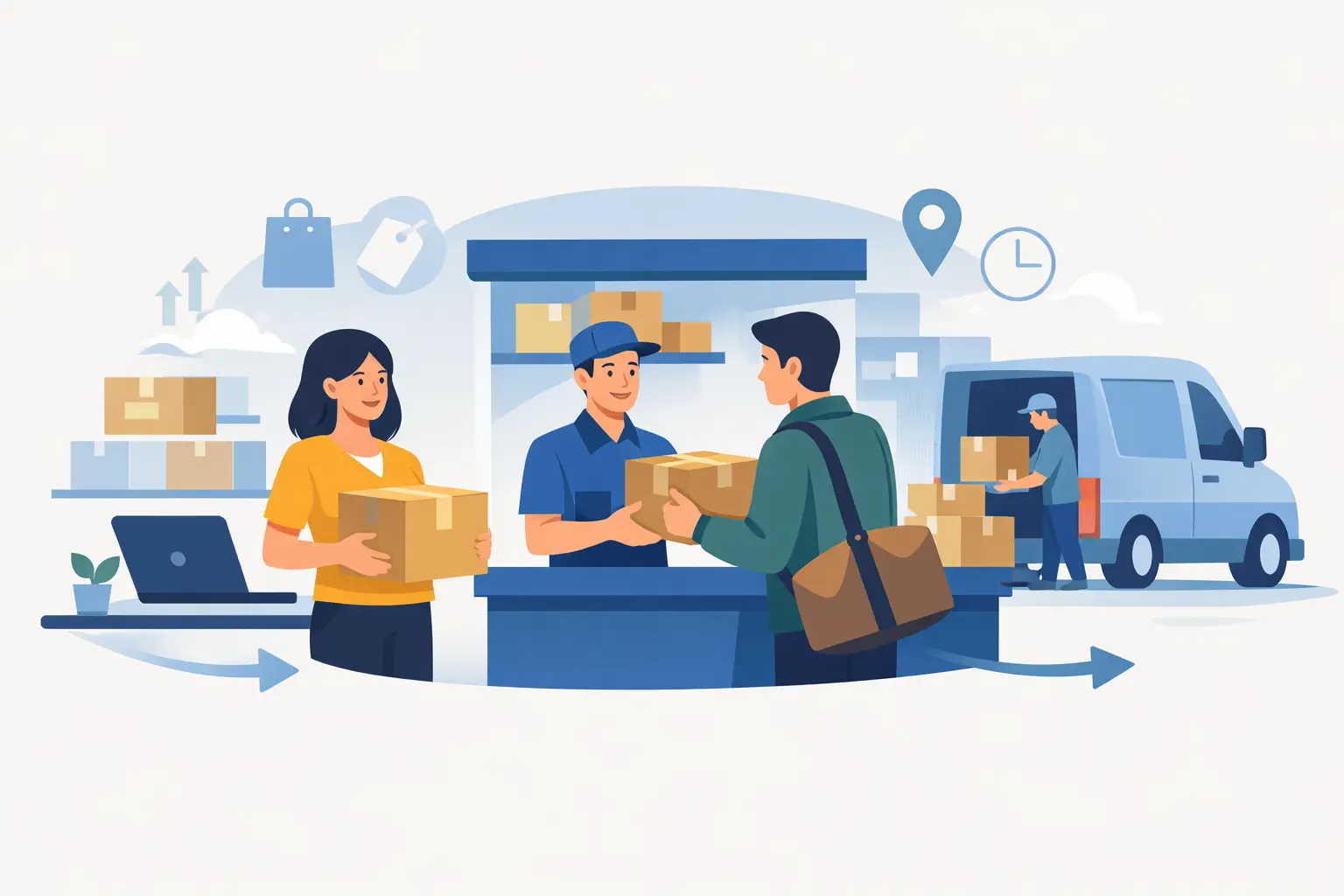
A late pickup can throw off an entire selling day. Orders are packed, labels are printed, customers are waiting, and then the courier cutoff becomes the problem. That is exactly where a parcel drop off service becomes more than a convenience. For online sellers, small businesses, and busy consumers, it gives back control over when and where parcels move.
For many businesses, shipping is not just the last step. It affects customer satisfaction, staff time, order volume, and even repeat sales. If getting parcels out the door is inconsistent, everything upstream starts to feel heavier. A dependable drop-off model reduces that pressure by making dispatch more accessible through nearby retail points and structured handover processes.
Why a parcel drop off service matters in daily operations
The biggest value of a parcel drop off service is flexibility. Instead of waiting for a driver or working around limited collection windows, sellers can bring parcels to a designated location when it suits their workflow. That may sound simple, but in practice it changes how a business plans packing, staffing, and customer promises.
For home-based sellers, this can mean dropping off parcels after preparing orders in batches. For retail businesses, it can mean using a nearby point as part of the daily closing routine. For growing e-commerce merchants, it creates another dispatch option when pickup demand becomes less predictable.
There is also a reliability factor. Pickup services are useful, but they are not always ideal for every volume, location, or schedule. Traffic, route constraints, and time windows can create friction. Drop-off services help reduce dependence on a single handover method. In logistics, having options usually leads to better consistency.
What businesses should expect from a good parcel drop off service
Not all drop-off networks deliver the same practical value. A useful service should do more than provide a counter and accept a parcel. It should fit real business routines.
Accessibility is the first test. If the point is too far, has poor operating hours, or creates long queues, it starts adding cost in the form of time. A stronger model places drop-off points closer to neighborhoods, shop lots, and everyday commercial areas where sellers already operate.
The second is process clarity. Staff should know how to handle parcel intake, basic checks, and scanning or acknowledgment procedures. Sellers need confidence that parcels handed over are properly received and moved into the network without confusion.
The third is service support. Many businesses do not only need to send parcels. They may also need packaging materials, printing support, forwarding help, or customer collection options. This is where a broader logistics ecosystem stands out. A drop-off point that supports multiple operational needs becomes more useful than a basic handover location.
Parcel drop off service use cases for SMEs and online sellers
A parcel drop off service works especially well for businesses that ship regularly but do not yet need a fully dedicated warehouse setup. That includes marketplace sellers, social commerce businesses, boutique retailers, live sellers, and growing direct-to-consumer brands.
A small seller with 10 to 30 orders a day may use drop-off to keep dispatch simple and affordable. Rather than waiting for pickups that may require minimum volume or fixed scheduling, the seller can pack in the morning and drop off in one trip.
A larger SME may use it as a backup or overflow channel. If pickup slots are full or same-day handover is urgent, drop-off gives operations teams another route to keep orders moving. In peak periods such as campaigns, payday weekends, or festive seasons, this flexibility matters.
Even physical retailers can benefit. A shop that already serves walk-in customers can send outgoing parcels from a nearby point without disrupting its main operations. If that retailer is also part of a station network, there may be added upside through customer traffic and service revenue.
The trade-off between pickup and drop-off
Drop-off is not always better than pickup. It depends on parcel volume, staffing, and how a business runs its day.
If a merchant handles high daily volume from a fixed location, scheduled pickup may still be the more efficient option. Moving dozens or hundreds of parcels manually takes time and coordination. In that case, pickup reduces labor and transport effort.
But for lower to mid-range volumes, changing order patterns, or sellers who value schedule control, drop-off can be the more practical choice. It removes the waiting game. It also helps businesses that operate outside standard office setups, including home sellers and micro-fulfillment teams.
The strongest logistics setup often uses both. Pickup handles predictable volume. Drop-off covers flexibility, urgency, and overflow. Businesses that understand this balance tend to make better operational decisions because they are not forcing one model to solve every shipping need.
Why local retail points make the model stronger
A parcel drop off service becomes much more useful when it is tied to a well-placed retail network. Local access changes customer behavior. People are more likely to use a service when it is part of their normal route, near their business, or available in familiar commercial areas.
That local presence also supports trust. Many customers and small business owners still value face-to-face service, especially when they are handing over sale items, customer orders, or important documents. A staffed retail point offers reassurance that a digital-only process cannot always provide.
This hybrid model is one reason logistics networks with station-based access points are gaining traction. They combine the convenience of distributed retail locations with the structure of a managed logistics platform. For businesses, that means easier sending, easier collection, and more touchpoints that support real operational needs.
In a market where speed matters but convenience often decides behavior, local points are not a minor detail. They are part of the service value itself.
A parcel drop off service can support more than shipping
For many merchants, shipping problems are rarely just about transport. They are connected to printing labels, securing packaging, handling returns, managing customer collection, and coordinating cross-border or forwarding needs. That is why a parcel drop off service is most valuable when it sits inside a wider service environment.
A seller dropping off parcels may also need to print invoices, buy mailers, repack fragile items, or arrange a different delivery path for a special order. When those needs can be handled in one place, operations become more efficient.
This is also where a business-friendly network creates a difference. iExpress, for example, is built around accessible station points and digital support that help merchants manage sending, collection, and related fulfillment tasks more practically. That approach reflects how real businesses operate. They do not need isolated services. They need workable systems.
What retail operators should notice
There is another side to the parcel drop off service model. For retail business owners and entrepreneurs, hosting logistics services can create a meaningful extension to an existing store operation.
A drop-off point can increase foot traffic, add service-based revenue, and make the outlet more relevant to the local community. Customers who come in to send or collect parcels may also purchase other products or services while they are there. For neighborhood retailers, that matters.
Of course, the opportunity depends on execution. The outlet needs training, a clear operating process, and the right digital support. Without that, parcel handling can become a distraction instead of a benefit. But with the right network and system behind it, a retail point can become part of a larger logistics ecosystem while still serving its own commercial goals.
Choosing the right service for your business
If you are evaluating a parcel drop off service, start with your workflow rather than the sales pitch. Look at how many parcels you send, when you pack them, how often your volume changes, and whether your team can manage handovers easily.
Then look at network coverage and service range. A nearby point with practical operating hours will usually outperform a more complicated option, even if the promised features sound better on paper. Day-to-day usability matters more than marketing language.
It also helps to ask what happens beyond the drop-off itself. Can the service support returns, self-collection, packaging, or fulfillment-related needs as your business grows? A provider that fits today but cannot support tomorrow may create more switching cost later.
The best logistics decisions are rarely about one parcel. They are about building a system that keeps your business moving without adding avoidable friction.
A good parcel drop off service does exactly that. It gives sellers more control, gives customers a more dependable experience, and gives retail operators a practical way to participate in modern commerce. When shipping becomes easier to access, business gets easier to run.