
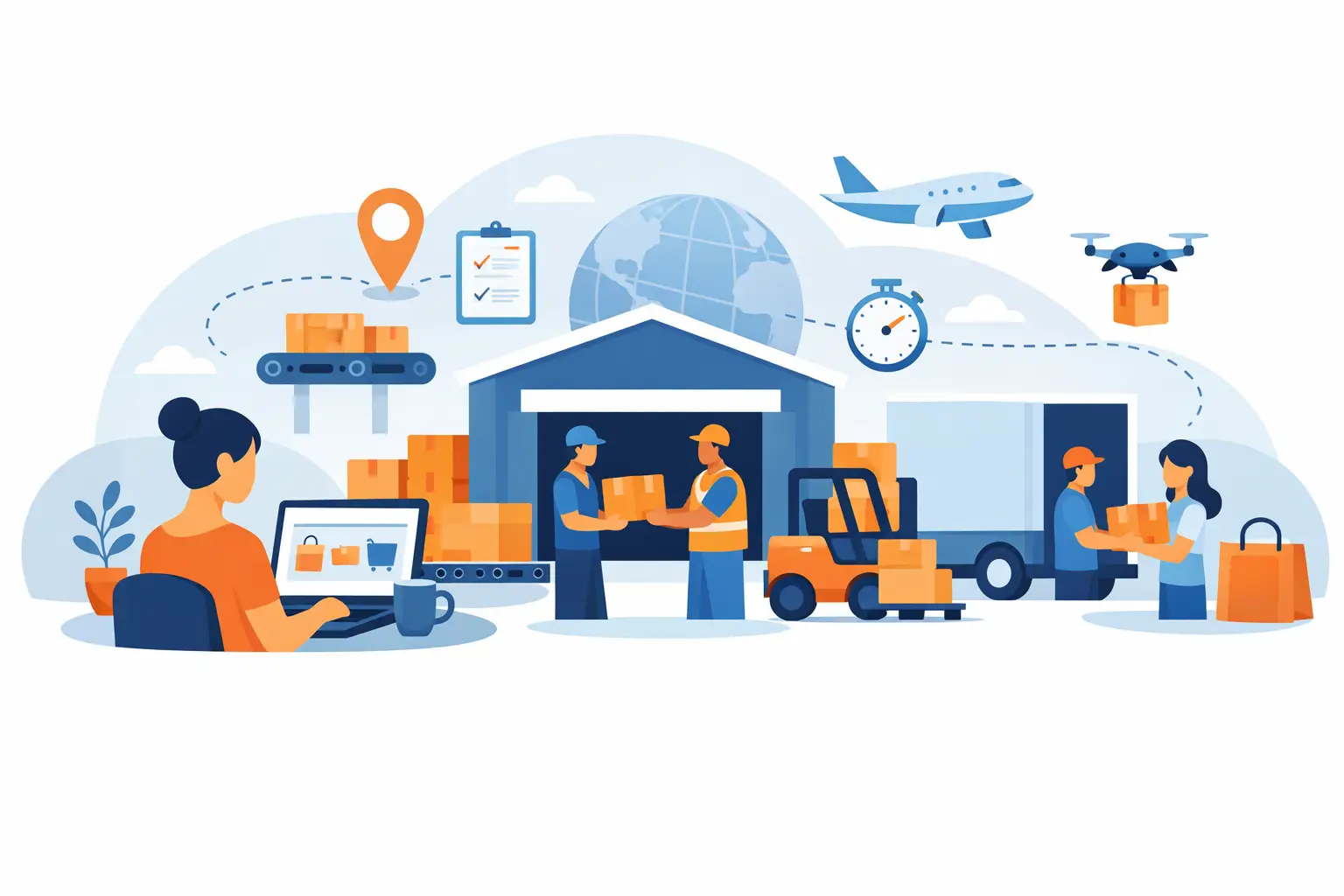
Late shipments rarely start as a shipping problem. More often, they start with stock sitting in the wrong place, orders being picked manually, buyers missing delivery attempts, or a seller spending too much time packing instead of selling. That is why choosing the right fulfillment partner for online sellers matters so much. It affects delivery speed, customer satisfaction, cash flow, and how far a business can grow without losing control.
For many small and mid-sized sellers, fulfillment looks manageable at first. A few orders a day can be packed from home, from a small office, or from a retail counter. But once order volume starts to climb, the hidden costs show up quickly. Staff get pulled into packing. Inventory counts become less reliable. Return handling gets messy. Customer service turns reactive because buyers keep asking where their parcels are.
A good fulfillment setup is not just about moving boxes out the door. It is about building a system that supports repeatable operations. If you sell through marketplaces, social commerce, direct-to-consumer channels, or a combination of all three, your backend needs to keep up with the front-end demand.
What a fulfillment partner for online sellers should actually do
At a basic level, a fulfillment partner stores inventory, processes incoming orders, picks and packs items, and hands parcels over for delivery. But for most online sellers, that baseline is not enough.
The better question is whether the partner helps reduce operational friction. Can they support fast handoff to delivery? Can they help manage self-collection or alternate pickup options for buyers who are not home? Can they support packaging needs, returns, and inventory visibility without forcing the seller into manual workarounds?
This is where many providers start to differ. Some are strong in warehousing but weak in last-mile flexibility. Others can move parcels, but they do not give sellers enough visibility into order status or stock movement. Some are built for large enterprise accounts and do not adapt well to SMEs that need practical support, flexible service, and room to scale gradually.
Start with your sales model, not the warehouse
Before comparing providers, look at how your business actually sells. A brand shipping 30 identical SKUs daily has very different needs from a seller handling mixed products, pre-orders, bundles, and marketplace promotions.
If your business runs frequent campaigns, your fulfillment partner needs to handle spikes without slowing down. If your buyers expect pickup flexibility, then delivery alone may not be enough. If your products need special packing, labeling, or inserts, the fulfillment operation has to support those details consistently.
This is why the cheapest quote is not always the lowest cost option. A low storage rate means very little if order errors increase, parcels get delayed, or your team still needs to spend hours chasing updates. Good fulfillment reduces labor, prevents mistakes, and protects the customer experience. That has real commercial value.
The key areas to evaluate
Speed is the first thing most sellers ask about, but speed needs context. Same-day processing sounds attractive, yet it only helps if inventory is accurate and courier handoff is reliable. Ask how orders are cut off, processed, packed, and dispatched. Also ask what happens during peak periods, weekends, and sales events.
Coverage matters just as much. If your customers are spread across urban and suburban areas, or if you sell across borders, your partner should have a network that supports practical delivery routes and collection options. For some sellers, buyer self-collection can reduce failed delivery attempts and improve convenience. That can be especially useful when buyers want more control over when and where they receive parcels.
System visibility is another major factor. Sellers need to know what stock is available, what has been shipped, and where exceptions are happening. A fulfillment setup without clear digital tracking creates extra admin work. Your team ends up checking spreadsheets, messaging different parties, and piecing together updates manually. That is not scalable.
Support quality is often underestimated until something goes wrong. During stock discrepancies, damaged shipments, delayed pickups, or customer disputes, you need a partner that can respond clearly and solve issues quickly. A provider with real operational experience will usually be more helpful than one that only offers generic account support.
Why local access points can be an advantage
For online sellers, logistics is no longer only about warehousing and delivery vans. Local access points can play a meaningful role in how parcels move and how buyers collect them.
A network that combines fulfillment with retail-based drop-off or self-collection points can create more flexibility for both merchants and customers. Sellers gain more ways to move parcels efficiently. Buyers get an alternative to waiting at home for delivery attempts. That can improve successful handover rates and reduce service friction.
This model can also support sellers that operate in communities where convenience matters as much as speed. A nearby station or pickup point may be more practical than a missed doorstep delivery, especially for working customers, apartment residents, or buyers managing their own schedules.
For that reason, some businesses do better with a logistics partner that offers both digital management and physical access points. It is not necessary for every seller, but for many growing merchants, it adds operational range without adding complexity.
Cost structure should be clear, not just competitive
Fulfillment pricing can look simple on the surface and become complicated once the invoices arrive. Storage fees, pick-and-pack charges, packaging materials, return handling, special labeling, failed delivery management, and account support can all affect the actual cost.
A dependable partner should be able to explain pricing in a way that maps to your business model. If you ship small, fast-moving items, your cost drivers may be different from a seller with bulky products or lower order frequency. The right provider will help you understand what you are paying for and where efficiencies can be created.
Transparency matters more than headline pricing. If a provider is slightly more expensive but reduces delays, customer complaints, and manual work, the business result may still be better. Sellers should calculate cost per fulfilled order in relation to service quality, not in isolation.
Growth changes what good fulfillment looks like
The fulfillment partner that works for a new seller may not be the one that supports the next stage of growth. Early on, flexibility and low commitment may matter most. Later, inventory discipline, automation, reporting, and broader logistics support become more important.
That is why scalability should be part of the conversation from the start. Can the partner handle a jump from 20 orders a day to 200 during a campaign? Can they support additional services like packaging, forwarding, import or export coordination, or outlet-based collection support if your business expands? Can they work with you as sales channels evolve?
A provider that understands both logistics and commercial operations is often better positioned to support that transition. In practice, sellers do not just need parcels shipped. They need a partner that sees how fulfillment connects to customer retention, product launches, campaign execution, and overall operating efficiency.
What to ask before you commit
The right questions usually reveal more than the sales deck. Ask how inventory is received and checked, how order errors are handled, what reporting is available, and how customer exceptions are escalated. Ask whether the service can support your current volume and what changes if that volume doubles.
You should also ask about flexibility. Can they support custom packaging? Can customers choose collection options? Is there support for businesses that need more than one logistics function, such as delivery, fulfillment, forwarding, printing, or packaging from one ecosystem?
These are not minor details. They shape how much work stays on your side after outsourcing. A fulfillment arrangement only helps if it genuinely removes operational burden.
For sellers that want a practical mix of fulfillment capability, accessible parcel touchpoints, and business support services, a provider such as iExpress can fit well because the model extends beyond standard courier movement. That kind of setup may be especially useful for SMEs that need real-world flexibility, not just warehouse space.
Choose for operational fit, not just brand name
A well-known provider is not automatically the right one for your business. The better choice is the one that fits your order profile, customer expectations, service geography, and growth plan.
If your fulfillment partner helps you ship accurately, offer convenient delivery or collection options, maintain visibility, and spend less time fixing exceptions, that partnership will support growth in a way that spreadsheets alone cannot measure.
The best decision is usually the practical one: choose the partner that makes your business easier to run tomorrow, not just cheaper to explain today.